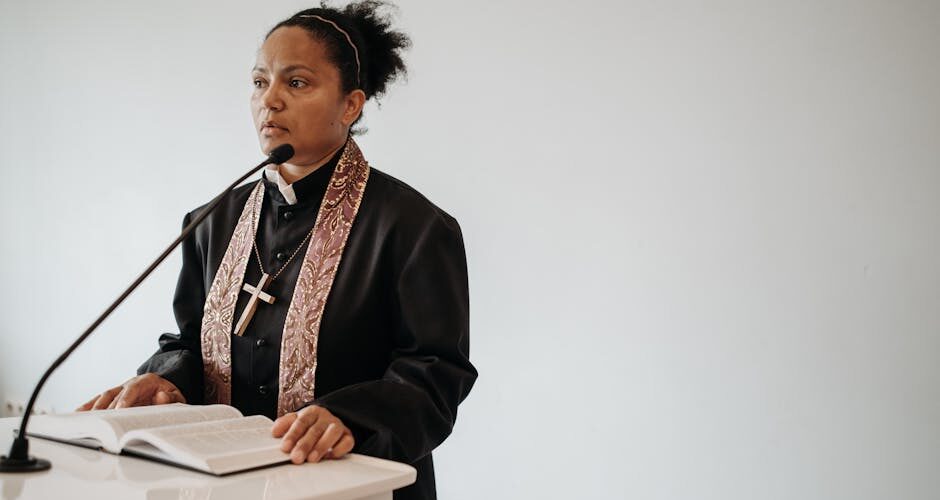
The Winds of Change: Women in Religious Leadership
The year 2026 stands as a landmark for women in religious leadership. Across denominations and faiths, women are increasingly stepping into roles traditionally dominated by men. Take the example of the Church of England. In recent years, the percentage of female bishops has risen to 40%, a stark contrast to the mere 8% just a decade ago. Women like Sarah Mullally, the Bishop of London, have become influential voices, advocating for both gender equality and social justice.
Meanwhile, in the Jewish faith, the Reform and Conservative movements have made significant strides. Women rabbis are no longer an anomaly but a commonplace presence at synagogues worldwide. In fact, one-third of all rabbinical students in these movements are now women, a significant leap from the previous generation.
Breaking Barriers: Women Scholars and Theologians
Women scholars and theologians are making their mark, challenging long-held interpretations and offering new insights. At Harvard Divinity School, for instance, the gender ratio among students is nearing parity. Female scholars are exploring intersections of gender, race, and faith, contributing nuanced perspectives to theological discourse. Their work on issues like eco-theology and liberation theology highlights the relevance of faith in addressing contemporary global crises.
Institutions like the Islamic University of Madinah have also seen an increase in female scholarship. Women’s studies programs have expanded, encouraging female students to delve into Quranic studies and Islamic jurisprudence. This trend is reshaping Islamic scholarship, fostering a more inclusive interpretation of religious texts.
Grassroots Movements: Empowering Women at the Community Level
At the grassroots level, women are driving change within their communities. In rural India, the Self-Employed Women’s Association (SEWA) has integrated spiritual practices with economic empowerment, providing a support network for women seeking entrepreneurial opportunities in traditionally patriarchal settings.
In the United States, organizations like Women of Reform Judaism are actively involved in community service, interfaith dialogue, and social justice advocacy. Their initiatives not only foster community cohesion but also empower women to take leadership roles within their congregations.
Global Challenges: Resistance and Backlash
Despite progress, challenges remain. In several countries, women in religious roles face resistance and backlash. The Vatican’s stance on women’s ordination remains unchanged, sparking debates and calls for reform. Catholic women advocating for ordination have organized international conferences, yet the path forward is fraught with institutional roadblocks.
Similarly, in Iran, women advocating for more significant religious roles face governmental restrictions. The situation underscores the complex interplay between religion, politics, and gender rights, highlighting the need for continued advocacy and dialogue.
Technology and Faith: A New Frontier for Women
Technology is opening new avenues for women’s participation in religious discourse. Online platforms and digital communities have become spaces where women can share their experiences, organize, and advocate for change. Social media campaigns like #FaithfulWomen have amplified women’s voices, fostering global solidarity.
In virtual spaces, women clergy and scholars host webinars and podcasts, reaching broader audiences and challenging traditional power structures. These digital initiatives also provide mentorship for younger women aspiring to religious leadership, ensuring the continuity of progress.
Practical Takeaway: Cultivating an Inclusive Future
The landscape of religion in 2026 reflects both progress and ongoing challenges for women. As women continue to break barriers and redefine roles, the importance of cultivating inclusive spaces within religious communities cannot be overstated. Encouraging dialogue, supporting female leadership, and leveraging technology are crucial steps in fostering an equitable and dynamic religious landscape. It is through these efforts that faith communities can truly reflect the diversity and richness of human experience.